
Maigre in Practice
How a Catholic Rule Became a Cajun Kitchen Habit

Maigre: The “Lean” Tradition in Cajun and Creole Cooking
Maigre, from the French word for “lean,” describes a way of cooking shaped by Catholic fasting rules. In Louisiana, doctrine mattered less than habit. In Cajun kitchens especially, maigre quietly structured the week. Fridays changed what went into the pot as a matter of routine. Seafood replaced meat. Oil or butter stood in for lard. The roux still went dark. Supper was still supper.
What’s easy to miss now is that maigre rarely announced itself. In many households, the word disappeared even as the practice endured. People didn’t talk about maigre. They cooked it. Over time, the rules settled into muscle memory, shaping dishes, techniques, and expectations without needing explanation.
In this issue of Make a Roux Already, we treat maigre as a case study in how Cajun and Creole cooking learned flexibility. It began as a named Catholic food category, but in practice it trained cooks to think in substitutions, adjustments, and workarounds. What fat you reached for. What protein you left out. How flavor, body, and depth were built under constraint. Seen this way, maigre reveals how limits sharpened technique long before anyone felt the need to explain why.
If you care about Cajun food as it was actually cooked, not just how it’s described after the fact, Make a Roux Already is where those conversations live. Subscribe to get each issue delivered, and to explore the techniques, habits, and quiet decisions that shaped Louisiana kitchens long before anyone felt the need to explain them.
What Maigre Meant in Catholic Tradition
In Catholic France, days of abstinence from meat were known as jours maigres, or “lean days,” set apart from jours gras, or “fat days,” when meat was permitted. To faire maigre—literally “do lean”—meant to forgo meat as a matter of observance. Going without meat didn’t mean going without food. It meant changing what counted as supper.
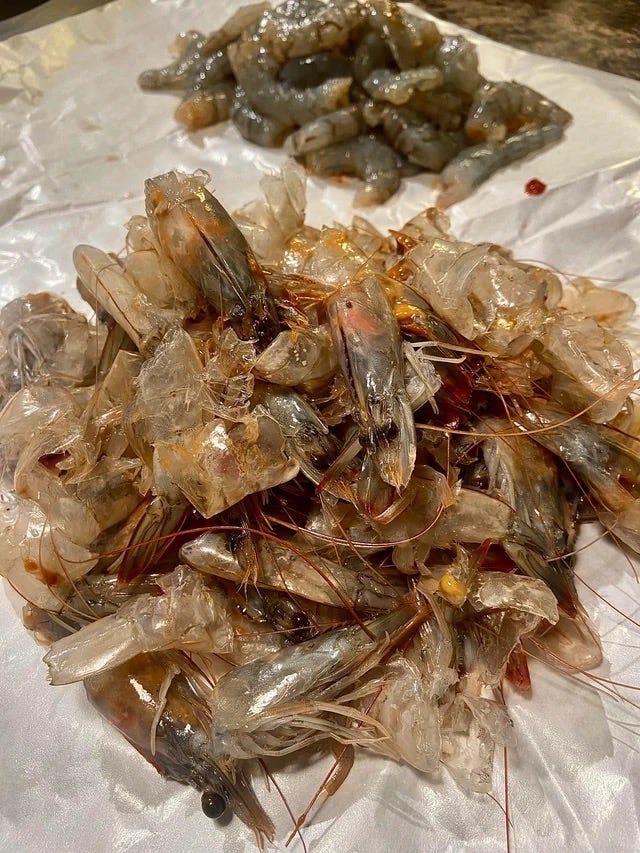
On designated days such as Fridays or during Lent, Catholics abstained from the flesh of warm-blooded animals. Fish and other seafood were permitted and often encouraged. Over time, this distinction created a parallel kitchen tradition—one built to ensure that fasting days still ended with satisfying meals.
In practice, the boundaries of “meat” followed a precise logic, if occasionally surprising. Land animals and birds were excluded. Anything that came from water was generally allowed. Fish and shellfish qualified without question. Amphibians and reptiles often did as well. In Louisiana, this logic persists. The Archbishop of New Orleans has affirmed that alligator counts as “seafood” for Lenten Fridays. Dairy and eggs moved in and out of restriction over the centuries, but by the nineteenth and early twentieth centuries most Catholics permitted them, narrowing abstinence to meat alone.
The goal was a lean diet in spirit—modest restraint without deprivation. Food on maigre days was expected to sustain both the body and the soul.
French culinary culture responded accordingly. Cooks learned to work within the rules while preserving pleasure at the table. Meatless meals became occasions for skill and ingenuity. As Florida food historian Doris Reynolds notes, “on days designated by the church as ‘maigre’… the reverent consumption of tasty foods still prevails.”1 In Provence, observant Catholics ate escargots, classified as aquatic mollusks, or gathered around dishes like Grand Aïoli—a generous spread of salt cod, vegetables, and garlicky egg yolk sauce traditionally served on Ash Wednesday, even when eggs were technically restricted.
The logic was straightforward. When meat was off the table, something else had to carry the meal. That approach traveled with French colonists to Louisiana, where maigre observance meant cooking differently with what was on hand.
From France to Louisiana: Lean Days in a New World
French and Spanish Catholic traditions took root early in colonial Louisiana, and with them came the practice of jours maigres. Fridays, in remembrance of Good Friday, and the season of Lent structured the calendar. Meatless cooking followed as a matter of course.
In the Creole communities of New Orleans, where Catholic life was publicly organized and well documented, maigre remained a visible and named category. Nineteenth-century newspapers, menus, and cookbooks regularly printed fast-day recipes, reflecting a shared understanding of how holy days shaped the table.
The Picayune’s Creole Cook Book from 1901 labels crab and okra gumbo as “a great fast-day or ‘maigre’ dish with the Creoles.” Lafcadio Hearn’s 1885 Creole cookbook includes recipes titled “Soupe Maigre (Without Meat, for Lent),” “Maigre Oyster Gombo,” and “Maigre Shrimp Gombo for Lent”—each designed to be filling and well seasoned while honoring abstinence. New Orleans restaurants routinely featured meatless courses on Fridays and during Lent, a practice that continued well into the twentieth century. In the city, maigre functioned as a recognized culinary category, something people named, planned for, and expected.
In the rural parishes of south Louisiana, the practice carried the same weight, though it took a different form. Acadian settlers, the ancestors of today’s Cajuns, brought with them the custom of abstaining from meat on Fridays and throughout Lent. An old Cajun French saying recalls that “dans le vieux temps le monde avait l’habitude de faire maigre tous les vendredis”—in the old days, people would “do maigre” every Friday. The habit became a beat in the weekly rhythm.
For many Cajun households, Friday supper simply followed a familiar pattern. As one Cajun put it, “Tu mangeais pas de viande le vendredi.” You did not eat meat on Friday. That was the understanding, and the cooking followed.
Fridays in Cajun Kitchens: Tradition and Adaptation
Looking closely at Cajun household practice shows how maigre operated through adjustments to the week’s routine. Cajun cooking relied heavily on pork, game, and sausage through most of the week. On Fridays, that same ingenuity turned toward fish, shellfish, vegetables, and whatever else could carry a meal without meat.
In the nineteenth and early twentieth centuries, access to seafood varied widely. Inland families often lived far from the coast, and without refrigeration or modern roads, fresh seafood didn’t travel well. Even so, cooks made do with what they had to honor meatless days.
Families near bayous and rivers relied on local catch. Catfish, perch, sac-à-lait, bass, and other freshwater fish appeared fried, stewed, or simmered into simple soups with vegetables. Fish courtbouillon, built on tomatoes and aromatics, became a dependable Friday dish.
Along the coast and in brackish waters, the options expanded to include shrimp, crabs, oysters, redfish, and trout. Crawfish traps set in the swamp could yield enough for an étouffée or stew by week’s end. At 64Parishes.org, Ryan Brasseaux notes that after about 1875, Louisiana Catholics increasingly turned to crawfish during Lent, when “religious restrictions prohibited the consumption of meat.”2 Crawfish became so closely tied to Lenten cooking that outside those seasons, many Cajuns ignored them or used them as bait.
Vegetables played a larger role, too. Garden produce moved to the center of the plate. Gumbo z’herbes, a green gumbo built from mixed leafy greens, appeared during Holy Week, especially on Good Friday. Folklorist Maida Owens observes that encountering a family making the “much less common, meatless gumbo z’herbes for Lent” signals old-line Catholic Louisiana roots.3 In Cajun households, a vegetable stew or smothered okra and tomatoes stood in for the usual meat-heavy pot. Beans and rice, commonly cooked with pork on Mondays, went into the pot on Fridays without the ham bone or sausage—seasoned simply with salt, pepper, and oil.
Seafood gumbo and broth rose in prominence under these conditions. As one food historian notes, in south Louisiana “Lent and maigre days required abstinence from meat, so vegetable and seafood broths rose to prominence.” A clear seafood stock on Friday could gain richness later in the week with the addition of chicken or sausage, showing how closely lean and meat-based cooking overlapped in practice. In many households, a pot of seafood gumbo on a Lenten Friday was a highlight of the week. “Religious abstinence never tasted so good,” as podcaster Sarah Holtz puts it.4
Cajun cooks also made use of long-standing allowances. Turtle sauce piquante, fried frog legs, and even alligator appeared on the table. Reptiles and amphibians counted as fish under abstinence rules, and church authorities in Louisiana have long classified alligator with seafood. Cooks also understood that church law permitted the use of meat fats even when meat itself was excluded.
A Friday roux posed a practical problem. Meat was off the table, but flavor and body still mattered. Many cooks reached for bacon grease already kept by the stove, using it to start a roux that carried smoke and depth without adding meat itself. Working that fat required care. Bacon grease runs hotter and darkens faster than lard or oil. The cook learned to control heat, timing, and color more precisely. Once vegetables went in and seafood followed, the roux did its job, binding the pot and carrying flavor through the dish. That skill did not disappear when Friday passed. The same control over heat and fat showed up later in weekday gumbos, sauces, and stews, long after the constraint that taught it had faded.
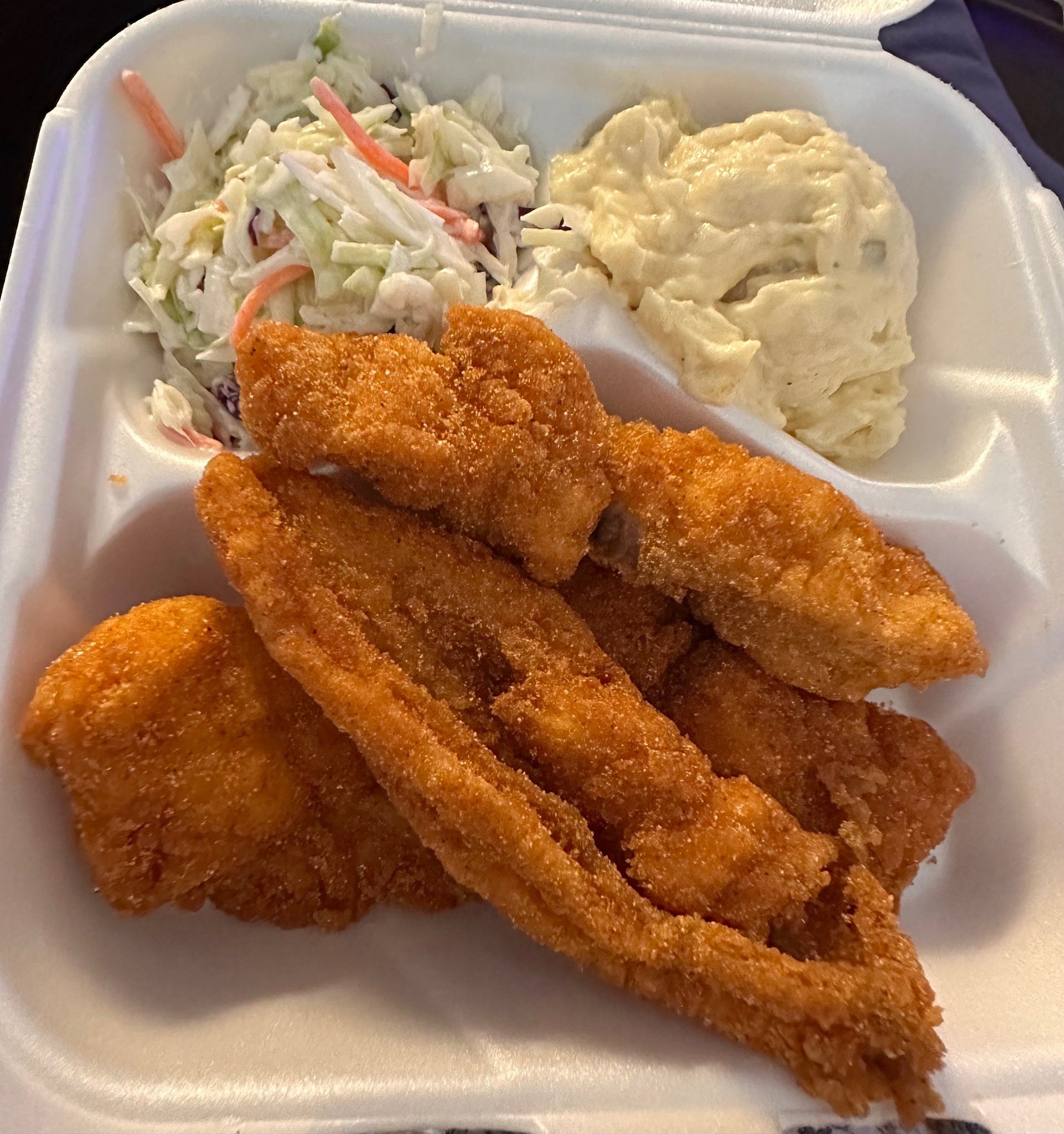
Over time, maigre became normalized beyond individual households. Public schools and local cafes in heavily Catholic parts of south Louisiana often served fish on Fridays. Markets stocked accordingly, knowing what customers would be cooking. This rhythm extended the practice beyond strictly religious observance. Neighbors shared fish fries. Plates of crawfish or seafood stew crossed fences and parish lines. As a contemporary observer in Acadiana notes, church fish fries during Lent “bring together their communities and welcome anyone hungry for fried catfish, regardless of religion.”
By the mid-twentieth century, abstaining from meat on Fridays had become a widely respected norm in Cajun culture. Even after church requirements eased in the 1960s, many families continued the practice out of habit. To this day, a Friday during Lent in Cajun country still feels distinct. Seafood markets are busy. Frying oil is hot.
The week turns, and the cooking follows.
Creole Contrasts: How New Orleans Named its Fast-Day Dishes
Creole New Orleans preserved the practice in writing. The city’s French-speaking, urban culture of the nineteenth century produced cookbooks, menus, and newspaper columns that offer a clear picture of how maigre was understood and discussed. In these sources, maigre appears as a defined category of cooking, openly named and expected.
Creole cookbooks routinely marked certain dishes as appropriate for fast days. The Picayune’s Creole Cook Book not only identified gumbos and soups suitable for abstinence, but used the term maigre directly in English text, assuming readers would recognize it without explanation. Dishes such as potage maigre d’hiver, a winter soup of peas and vegetables, were promoted as Lenten fare. In New Orleans, cooks spoke of maigre meals, planned for them, and swapped recipes for what to serve on a Friday.
Public traditions reinforced this visibility. Gumbo z’herbes, the meatless greens gumbo, became a hallmark Good Friday dish in Creole families. Some households prepared it with an abundance of different greens—one for each special friend or family member—and shared it at gatherings on Holy Thursday or Good Friday. In this context, maigre moved beyond private adjustment and became something named and celebrated, while remaining rooted in home cooking.
The quality of the food sometimes eclipsed the spirit of restraint. A New Orleans newspaper column from 1907 observed that on maigre days, diners often ate so well on fish and seafood “that the only sacrifice was not having room for dessert.” The remark captures a recurring theme. Outsiders saw fast days as austere. Locals saw shrimp gumbo, oyster dishes, and a well-set table.
In Creole New Orleans, maigre functioned as both rule and opportunity. Menus advertised table maigre. Cookbooks recorded the practice. The paper trail survives. In the Cajun prairie and bayou, fewer records remain, but the cooking followed its own steady logic. The distinction lies more in how openly the practice was named than in the food itself.
Myths and Misunderstandings of Maigre Today
As formal Catholic food observance has receded, the word maigre has slipped out of everyday use. What remains are a few assumptions that flatten a practice that was, in fact, flexible and resourceful. A brief clarification helps restore proportion.
Maigre did not mean hunger or plain food. In Louisiana kitchens, abstinence applied to meat, not to effort or satisfaction. Cooks responded by leaning into seafood, vegetables, roux, herbs, and stock. French Catholics had long understood this, preparing elaborate meatless meals during Lent and enjoying them with a clear conscience. Louisiana followed the same pattern. A crawfish bisque or an okra gumbo rich with crab doesn’t read as punishment. Within the boundary of avoiding meat, creativity took over.
Cajun food drew from multiple sources, not only seafood. Catholic abstinence encouraged seafood cooking on certain days, but everyday diet depended on other proteins. For much of the nineteenth and early twentieth centuries, inland Cajun families relied primarily on pork from the boucherie and game from hunting. Fish and shellfish appeared most consistently during maigre periods. As Emma Squier notes, outsiders often mistake seafood for the hallmark of Cajun cooking, even though many Cajuns historically “had little access to seafood” in daily life.5 Crawfish, like lobster in New England, carried the reputation of poor man’s food well into the nineteenth century before later becoming a celebrated emblem of the cuisine. Maigre introduced and normalized seafood dishes, though it remained one thread in a food culture grounded elsewhere.
The word maigre may sound archaic, but the practice has endured. Many families still expect seafood on Fridays, especially during Lent, because that rhythm remains embedded in community life. People may not say they’re keeping maigre, but when sausage stays out of the gumbo on a Friday in March, the same habit is at work. Observance varied by household. Some families treated every Friday as a lean day year-round. Others observed only during Lent. Some bent the rules quietly. What mattered was continuity more than precision.
In the kitchen, maigre shaped a practical way of cooking that influenced habits, expectations, and technique long after the word itself faded from use.
The Practice That Outlived the Name
By the time the word maigre slipped out of common use, the cooking it shaped was already secure. Fridays still carried their own logic. Seafood moved to the center. Certain fats stayed on the shelf. The rhythm held because it had been absorbed into how people cooked, shopped, and planned meals. Over generations, that pattern taught cooks how to build body and depth without relying on meat, how to let seafood carry a dish without apology, and how to treat constraint as an invitation to work more carefully at the stove. The lasting mark of maigre in Louisiana is not the rule that named it, but the technique it refined.
If you enjoy the way Make a Roux Already looks at tradition, habit, and craft, you might also like its sister Substack, Drop the Needle: Music That Matters.
Drop the Needle explores music with the same care for context and technique—from symphonic works to studio recordings, from cultural history to the quiet mechanics of why certain sounds move us. Each issue treats listening as an active practice, not background noise.
Subscribe to Drop the Needle: Music That Matters for curated playlists, essays, and deep dives into music that rewards attention.

Thanks for the fishy history lesson! Just curious, do you know if the Church in Louisiana allowed beavers on Fridays like up in Canada?
Also, do you have a recipe for gumbo z’herbes? A vegetarianish gumbo sounds awesome :)
Excellent work, I really appreciate this writing!